

Last Updated: March 2026 | Reading Time: 4 minutes | Author: First and Geek Editorial Team
WhatsApp is expanding testing of a new feature that could change how people connect on the platform. Guest chats, which allow people without WhatsApp accounts to participate in conversations, are now rolling out to a limited number of beta testers on iOS and the web after months of Android testing. This development represents a significant shift in how the messaging service approaches user acquisition, particularly in markets where WhatsApp adoption remains lower.
Key Takeaways
- WhatsApp is testing guest chats that let non-users join conversations through shareable links
- The feature is now available to limited iOS, Android, and web beta testers after initial Android testing
- Guest chats maintain end-to-end encryption but currently lack support for media, voice calls, and group conversations
- Guest sessions expire after 10 days of inactivity and display clear labels identifying non-registered participants
- No timeline has been announced for a wider public release
How Guest Chats Work
The guest chat feature addresses a common friction point in messaging: what happens when you need to communicate with someone who doesn’t use your preferred platform. WhatsApp’s solution involves generating shareable chat links that anyone can use, even without creating an account.
Users with WhatsApp accounts can create these links through an “Invite a friend” section within the app. Once generated, the link can be shared through SMS, email, or any other communication method. When someone without a WhatsApp account opens the link, they’re taken to WhatsApp Web where they can participate in the conversation as a guest.
Security and Privacy Considerations
Despite guests not having full accounts, WhatsApp maintains its commitment to end-to-end encryption for these conversations. The system generates a unique identifier for each guest session, which is then used to create the encryption key. This means the content of guest chats remains private and inaccessible to WhatsApp itself, matching the security standard of regular conversations.
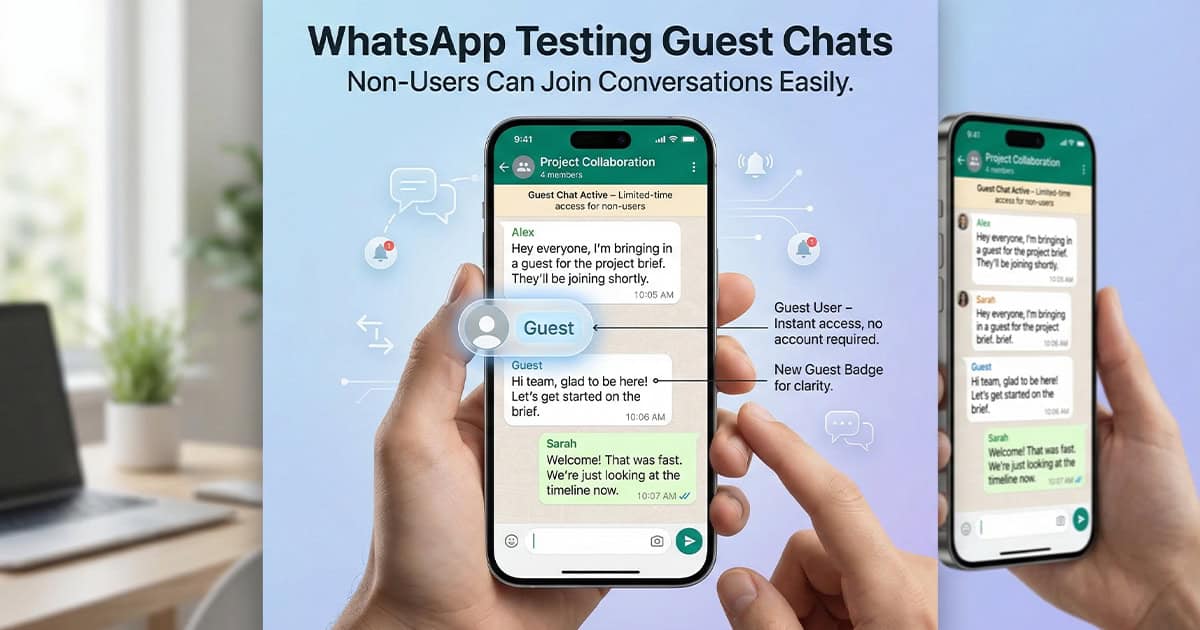
However, there’s an important security detail to understand: anyone who obtains the invite link can join the chat. This design choice means you should treat these links with the same care you’d give any sensitive access credential. Once a guest joins, WhatsApp clearly labels them with a “(Guest)” designation and adds a disclaimer stating “Not registered with WhatsApp,” making it obvious to all participants when someone is using the guest feature.
Current Limitations
The guest chat feature in its current form is fairly basic compared to full WhatsApp functionality. Understanding these limitations helps set appropriate expectations for real-world use.
- Text-only conversations: no support for voice messages, attachments, stickers, or GIFs
- No voice or video calling capabilities
- Limited to one-on-one chats with no group conversation support
- 10-day expiration period after inactivity
- Guest must initiate the conversation after receiving the link
These restrictions make sense for an initial rollout. They keep the feature simple while WhatsApp evaluates how people use it and what additional capabilities might be valuable. The text-only limitation also reduces potential abuse vectors that could come from allowing anonymous file sharing.
Why This Feature Matters
WhatsApp’s motivation for developing guest chats becomes clearer when you consider the messaging landscape across different regions. While WhatsApp dominates in many international markets, it faces stiffer competition in countries like the United States where iMessage, SMS, and other platforms maintain strong positions.
Guest chats lower the barrier to entry by letting people experience WhatsApp without the commitment of creating an account and downloading an app. It’s a smart acquisition strategy: once someone has a positive experience chatting with a friend or family member through a guest session, they’re more likely to create a full account to access additional features.
For existing users, the feature solves a practical problem. Instead of switching to SMS or asking someone to download an app just to have a conversation, they can simply send a link. This is particularly useful for temporary communications like coordinating a delivery, working with a service provider, or connecting with someone during travel.
Availability and Rollout Timeline
Guest chats first appeared in Android beta testing last August and are now expanding to iOS TestFlight participants and web beta users. The limited rollout suggests Meta is taking a measured approach, likely gathering feedback and monitoring usage patterns before making the feature widely available.
There’s currently no announced timeline for when guest chats might reach the general public. This cautious approach is typical for messaging features that involve security and privacy considerations. Meta will likely want to ensure the feature works reliably and doesn’t create unexpected problems before rolling it out to WhatsApp’s billions of users worldwide.
FAQ
Q: Can guests access WhatsApp on mobile devices?
A: Currently, guest chats only work through WhatsApp Web. Guests cannot use the mobile app without creating a full account.
Q: What happens to a guest chat after the 10-day expiration period?
A: Guest chats expire after 10 days of inactivity, though the specific details about whether chat history is preserved or can be reactivated have not been clarified.
Q: Can a guest create a full WhatsApp account from within a guest chat?
A: Yes, guests have the option to create a full account during their guest session, which appears to be part of WhatsApp’s strategy for converting guest users into registered members.
Q: Will guest chats eventually support media sharing and group conversations?
A: While the current version is limited to text-only one-on-one chats, Meta has not announced whether additional features will be added in future updates.
First and Geek Verdict
Guest chats represent a thoughtful solution to a real communication problem, even if the current implementation is fairly limited. The ability to connect with someone who doesn’t use WhatsApp without forcing them through an account creation process removes friction that often derails quick conversations. The commitment to maintaining end-to-end encryption for these guest sessions is particularly noteworthy and demonstrates that convenience doesn’t have to come at the expense of privacy.
The feature’s limitations make sense for an initial release, though it will be interesting to see whether Meta expands capabilities based on user feedback. Text-only conversations work fine for many scenarios, but the lack of media sharing and group support does restrict usefulness. The 10-day expiration helps prevent abandoned guest sessions from lingering indefinitely, though it might feel arbitrary for some use cases.
For WhatsApp users in regions where the platform isn’t universally adopted, guest chats could prove genuinely useful. Whether the feature becomes a meaningful driver of new user acquisition remains to be seen, but it’s a lower-risk way for people to try WhatsApp than committing to a full account. As with any beta feature, patience will be required as Meta works through the testing process before deciding on wider availability.