
Last Updated: April 2026 | Reading Time: 4 minutes | Author: First and Geek Editorial Team
OpenAI appears to be moving forward with ambitious hardware plans, with the company’s policy chief suggesting a potential unveiling in 2026. Meanwhile, the collaboration between OpenAI’s Sam Altman and legendary designer Jony Ive continues to gain momentum with new hires from Apple’s talent pool.
OpenAI Targets Second Half 2026 for Hardware Reveal
According to statements made at a recent industry event, OpenAI’s policy chief Chris Lehane indicated the company is reportedly “on track” to unveil its first hardware device during the latter half of 2026. While Lehane stopped short of committing to an actual product launch this year, the statement suggests development is progressing toward at least a public announcement.
This timeline aligns with earlier industry expectations that pointed toward a 2027 launch window for OpenAI’s hardware ambitions. The possibility of a 2026 reveal, even if retail availability comes later, represents a significant milestone for the AI company as it expands beyond software and services.
Jony Ive’s Design Team Attracts Apple Veterans
The collaboration between OpenAI and Jony Ive’s design firm continues to attract notable talent from Apple’s engineering and design divisions. Janum Trivedi, an engineer and interface designer who previously worked on SpringBoard at Apple, has reportedly joined the OpenAI and LoveFrom design team working on “io products.”
Trivedi’s background includes significant contributions to iPadOS 15, where he worked on features including Split View, Multitasking Drag and Drop, and iPad Pointer Gestures. This kind of experience in creating intuitive, touch-based interfaces could prove valuable as OpenAI develops its hardware vision.
What We Know About OpenAI’s Hardware Plans
The partnership between Sam Altman and Jony Ive was first announced in mid-2023, with both leaders expressing their intention to create a family of AI-powered hardware products. Since then, details have emerged gradually, painting a picture of an audio-focused device that leverages OpenAI’s language models in new ways.
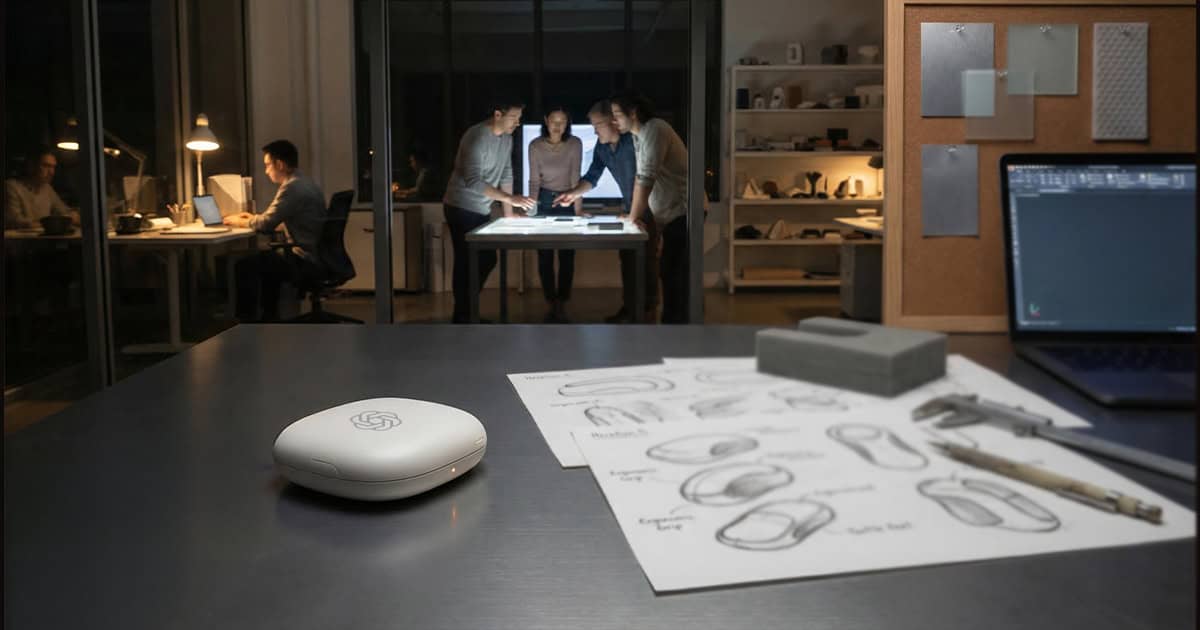
Recent reports suggest the device will be primarily audio-based, relying heavily on voice interaction rather than traditional touchscreen interfaces. OpenAI has reportedly been strengthening its audio models in preparation for this hardware debut, which makes sense given the company’s expertise in conversational AI through ChatGPT.
The duo revealed late last year that they had completed a first prototype as development continues. This suggests the project has moved beyond the conceptual phase into actual hardware iteration, a crucial step toward eventual commercialization.
The Significance of Apple Talent Migration
The steady flow of Apple veterans to Ive’s team at OpenAI speaks volumes about the project’s ambitions and credibility. Jony Ive himself left Apple in 2019 after more than 25 years with the company, during which he shaped the design language of products from the iMac to the iPhone to the Apple Watch.
That experienced Apple designers and engineers are choosing to join this venture suggests they see genuine potential in the project. These professionals bring not just technical skills, but deep understanding of how to create consumer hardware that feels intuitive and refined, qualities that Apple products are known for.
The Competitive Landscape for AI Hardware
OpenAI won’t be entering an empty market. Several companies have attempted to create AI-powered hardware devices with mixed results. From smart speakers to dedicated AI assistants, the challenge has always been creating a device compelling enough to justify its existence alongside smartphones that already handle many AI tasks.
What OpenAI potentially brings to the table is cutting-edge language model technology combined with world-class industrial design expertise. If the company can create a device that meaningfully improves on smartphone-based AI interactions, it could carve out a meaningful niche.
The audio-first approach is particularly interesting. While smartphones excel at visual interfaces, a device optimized specifically for conversational AI might offer advantages in hands-free scenarios, accessibility, or situations where pulling out a phone is inconvenient.
What to Expect in the Coming Months
If OpenAI follows through with a late 2026 unveiling, we can expect the rumor mill to accelerate considerably in the months ahead. More details about the device’s capabilities, form factor, and intended use cases will likely emerge as the company moves closer to a public announcement.
Key questions remain unanswered: Will this be a standalone device or something that works in conjunction with smartphones? What will the pricing strategy look like? How will it integrate with existing OpenAI services like ChatGPT? These details will determine whether OpenAI’s hardware ambitions represent a genuine innovation or simply another attempt to solve a problem that doesn’t quite exist yet.
FAQ
Q: When will OpenAI’s hardware device actually be available to purchase?
A: While OpenAI has indicated a potential unveiling in the second half of 2026, the company has not committed to a specific retail launch date. Previous reports suggested a 2027 timeframe for actual availability, which remains a reasonable expectation even if the device is announced this year.
Q: What role is Jony Ive playing in the OpenAI hardware project?
A: Jony Ive is collaborating with OpenAI through his design firm LoveFrom, providing design leadership for what’s being called the “io” product line. His team, which includes former Apple employees, is reportedly responsible for the industrial design and user experience of OpenAI’s hardware products.
Q: Will OpenAI’s device compete directly with smartphones?
A: Based on available information suggesting an audio-focused device, it appears more likely that OpenAI’s hardware will complement rather than replace smartphones. The device seems designed to excel at voice-based AI interactions rather than serving as a general-purpose computing device.
First and Geek Verdict
OpenAI’s hardware ambitions represent one of the more intriguing developments in consumer technology right now. The combination of advanced AI capabilities, Jony Ive’s design sensibility, and talent drawn from Apple’s ranks creates a compelling foundation, but hardware success requires more than impressive credentials. The true test will be whether OpenAI can identify a genuine need that existing devices don’t adequately address and create something people actually want to use daily. An audio-first approach makes sense given OpenAI’s strengths, but the device will need to offer clear advantages over simply talking to your smartphone. With a potential unveiling later this year, we won’t have to wait much longer to see if this high-profile collaboration can deliver on its promise. The talent and technology are certainly there, but as countless failed hardware ventures have shown, that’s only part of the equation.