

Last Updated: April 2026 | Reading Time: 4 minutes | Author: First and Geek Editorial Team
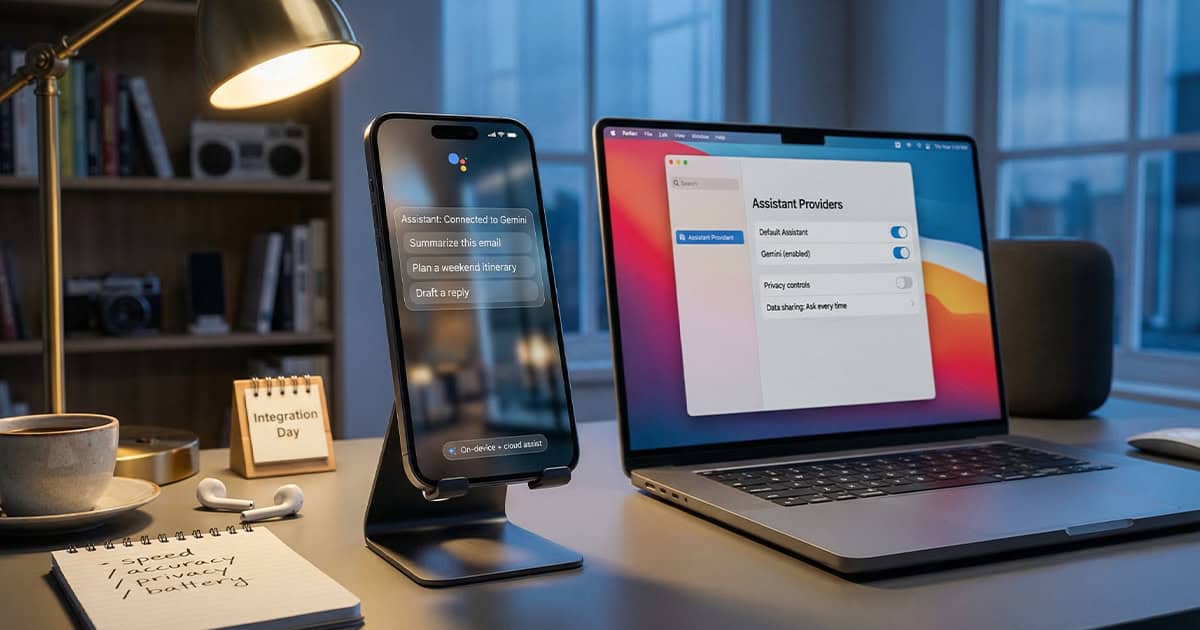
Apple has confirmed that Google’s Gemini AI models will power new features coming to Siri and Apple Intelligence. This collaboration marks a significant shift in Apple’s approach to artificial intelligence and raises important questions about the future of voice assistants on iPhone, iPad, and Mac. Here’s what we know about this partnership and what it could mean for everyday users.
Understanding the Apple and Google Partnership
The integration of Google Gemini into Siri represents a notable departure from Apple’s traditional preference for in-house development. Rather than relying solely on its own AI infrastructure, Apple is reportedly incorporating Google’s advanced language models to enhance Siri’s capabilities and deliver more sophisticated responses to user queries.
According to reports, Apple plans to fine-tune the Gemini models independently, which suggests the company will maintain some control over how the technology integrates with its ecosystem. This approach could allow Apple to leverage Google’s AI expertise while preserving the privacy-focused experience that Apple users expect.
What Features Are Coming
While specific details remain limited, reports indicate that more than eight new iPhone features powered by Gemini are expected to arrive in upcoming updates. These enhancements will likely focus on improving Siri’s conversational abilities, contextual understanding, and overall usefulness in daily tasks.
The collaboration suggests Apple is working to close the gap between Siri and competing voice assistants that have made significant strides in natural language processing. Users may see improvements in areas such as complex question answering, better follow-up conversation handling, and more nuanced understanding of user intent.
Privacy Considerations
One of the most pressing questions surrounding this partnership involves user privacy. Apple has built its brand partly on strong privacy protections, while Google’s business model relies heavily on data collection and analysis. How these two philosophies will coexist in practice remains to be seen.
Apple will need to clarify how user data is handled when Siri requests are processed using Gemini models. The company’s approach to fine-tuning the models independently may indicate efforts to implement privacy safeguards, but users will want concrete assurances about data handling practices before the features roll out.
What This Means for Apple Intelligence
Apple Intelligence, the company’s broader AI initiative, appears to be taking a more pragmatic approach than many observers expected. Rather than building everything from scratch, Apple seems willing to partner with established AI leaders when it makes sense.
This strategy could accelerate the rollout of meaningful AI features to Apple devices while the company continues developing its own capabilities. It’s a balancing act between maintaining the Apple experience and delivering competitive features in a rapidly evolving AI landscape.
Timeline and Availability
Apple has not announced a specific release date for Gemini-powered Siri features. Based on typical development cycles and the company’s software update patterns, these capabilities could arrive as part of future iOS updates, though the exact timing remains unconfirmed.
Users should expect a gradual rollout rather than an immediate transformation. Apple typically tests new features extensively before wide release, particularly when they involve significant changes to core functionality like Siri.
Industry Implications
The Apple-Google collaboration signals a shift in how major tech companies approach AI development. Rather than viewing AI as a zero-sum competition, this partnership suggests companies may be more willing to work together when it benefits users and advances their respective platforms.
For consumers, this could mean faster innovation and better features across the board. The competition between AI assistants has been healthy for the industry, pushing each company to improve their offerings. Strategic partnerships like this one may represent the next phase of that evolution.
FAQ
Q: Will I need to use a Google account to access Gemini-powered Siri features?
A: Apple has not confirmed the exact requirements, but based on the integration approach described in reports, users will likely access these features through Siri as usual without needing separate Google credentials. Apple appears to be incorporating Gemini as a backend technology rather than requiring direct Google account integration.
Q: Which devices will support the new Gemini-powered features?
A: Apple has not announced specific device compatibility yet. New AI features typically require recent hardware with sufficient processing power, so expect support for newer iPhone, iPad, and Mac models. More details should emerge as release dates approach.
Q: Can I opt out of using Google Gemini if I prefer not to use Google technology?
A: Apple has not yet detailed user controls for these features. Given the company’s emphasis on user choice in other areas, some level of control seems likely, but specifics remain unclear until Apple provides more information about implementation.
Q: Will this replace Apple’s own AI development efforts?
A: This partnership appears to complement rather than replace Apple’s internal AI development. Apple continues investing heavily in its own machine learning and AI capabilities, and the Gemini integration likely serves as a bridge to enhance features while proprietary solutions mature.
First and Geek Verdict
The integration of Google Gemini into Siri represents a pragmatic move by Apple to improve its AI capabilities while the company continues developing its own solutions. For users, this partnership could deliver meaningful improvements to Siri’s usefulness and conversational abilities sooner than if Apple went it alone.
The success of this collaboration will largely depend on how Apple handles privacy concerns and maintains the user experience standards people expect from the company. If Apple can deliver Google’s AI capabilities within its privacy framework, users could benefit significantly. However, transparency about data handling and clear user controls will be essential to maintaining trust.
As with any unannounced features, it’s worth maintaining realistic expectations. The actual implementation may differ from current reports, and timelines can shift. What’s clear is that Apple recognizes the need to accelerate its AI capabilities, and partnering with Google represents one path toward that goal. Whether this collaboration delivers on its promise remains to be seen, but it’s an intriguing development worth watching as it unfolds.