
Last Updated: April 2026 | Reading Time: 4 minutes | Author: First and Geek Editorial Team
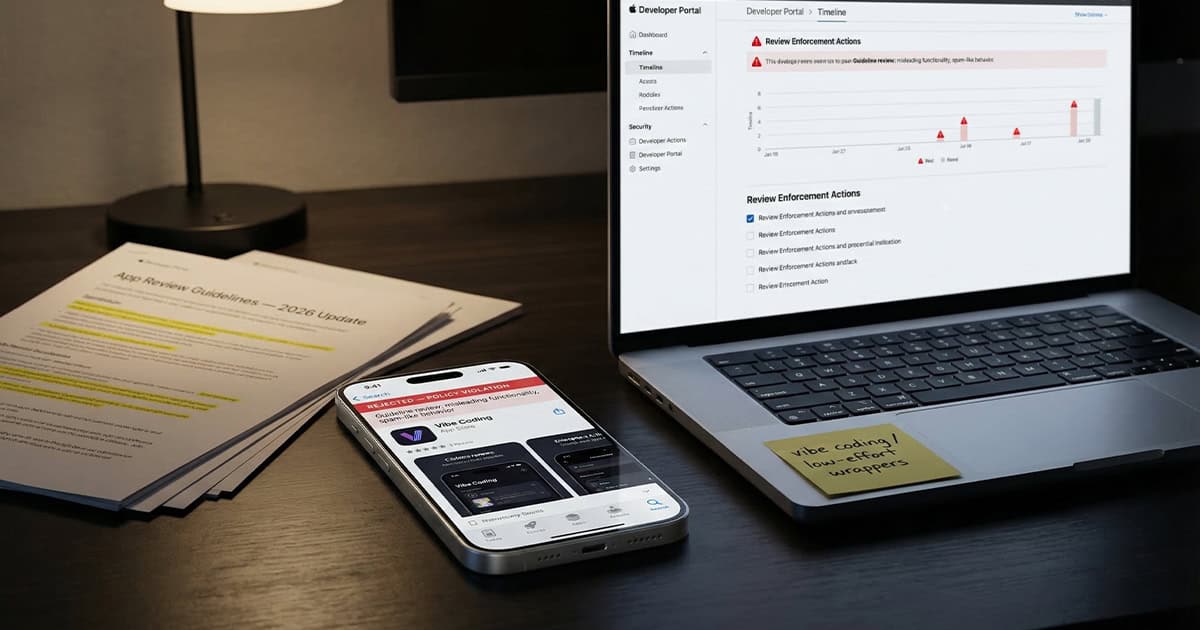
Apple has reportedly begun taking a closer look at apps submitted to the App Store that were created using a technique developers are calling “vibe coding.” This increased scrutiny marks a shift in how the company evaluates certain app submissions, particularly those that may rely heavily on automated code generation tools. The move could affect how developers approach app creation and what types of apps make it through Apple’s review process.
Key Takeaways
- Apple is reportedly pushing back on iPhone apps created through “vibe coding” methods
- The term refers to apps built using automated code generation without deep technical oversight
- Developers are finding it harder to get certain apps approved through the App Store review process
- This enforcement reflects Apple’s ongoing focus on app quality and user experience standards
What Is ‘Vibe Coding’ and Why Does It Matter?
The term “vibe coding” describes a development approach where apps are created largely through automated tools or code generation systems, often without the developer having traditional programming expertise or deep technical knowledge of what the code actually does. While technology has always made app development more accessible, this particular approach has caught Apple’s attention as the company evaluates whether these apps meet its quality and functionality standards.
For everyday iPhone users, this matters because it affects the types of apps that appear in the App Store. Apple has long positioned itself as a gatekeeper that ensures apps meet minimum standards for security, performance, and user experience. When apps are created without thorough understanding of their underlying code, there’s potential for bugs, security vulnerabilities, or features that don’t work as advertised.
What Developers Are Experiencing
According to reports, developers who have submitted apps created through these methods are seeing increased rejection rates or requests for additional information during the App Store review process. Apple’s review team appears to be asking more detailed questions about how apps were built and whether developers can adequately support and maintain their code.
This isn’t entirely new territory for Apple. The company has historically rejected apps that appeared to be low-effort submissions, clones, or spam. What’s different now is the focus on the development methodology itself, rather than just the end result. Apple seems to be evaluating whether developers have sufficient technical knowledge to maintain their apps over time and respond to bugs or security issues.
The Bigger Picture for App Store Quality
This enforcement effort fits into Apple’s broader App Store policies, which have evolved over the years to address different types of quality concerns. In the past, Apple has cracked down on template-based apps, simple web view wrappers, and apps that didn’t offer substantive functionality. The company’s App Store Review Guidelines emphasize that apps should be complete, stable, and offer genuine value to users.
For families and everyday users, stricter enforcement can mean fewer low-quality apps cluttering search results and potentially fewer apps that don’t work properly or contain hidden problems. However, it also means that innovative uses of new development tools might face additional hurdles, and smaller independent developers could find the approval process more challenging.
What This Means for App Developers
Developers who use code generation tools as part of their workflow aren’t necessarily being shut out of the App Store. The key distinction appears to be whether developers understand their code well enough to maintain it, fix problems, and ensure it meets Apple’s technical standards. Using modern development tools is one thing; submitting apps without understanding how they work is another.
For those creating apps for the iPhone, this likely means being prepared to explain your development process during the review phase and demonstrating that you have the technical capability to support your app after launch. Apple’s review team may ask specific questions about functionality, security measures, and how various features were implemented.
Historical Context: Apple’s App Store Evolution
Apple has continuously refined its App Store policies since the platform launched in 2008. Early on, the store faced criticism for inconsistent enforcement and arbitrary rejections. Over time, Apple has tried to make its guidelines clearer while still maintaining control over app quality. The company has rejected apps for reasons ranging from duplicating built-in functionality to violating privacy rules to simply being too basic.
This latest focus on development methodology represents another chapter in that ongoing evolution. As development tools become more powerful and accessible, Apple appears to be drawing lines around what constitutes acceptable use of those tools. Whether this approach proves sustainable or faces pushback from the developer community remains to be seen.
FAQ
Q: Does this mean Apple is banning all apps made with code generation tools?
A: Not necessarily. The reported focus appears to be on apps where developers lack sufficient understanding or control over their code, rather than the tools themselves. Developers who understand their code and can properly maintain their apps may still use modern development tools.
Q: Will this affect apps already in the App Store?
A: The reports focus on new app submissions and updates going through the review process. It’s unclear whether Apple is retroactively evaluating existing apps, though the company has historically removed apps that no longer meet current guidelines during routine reviews.
Q: How can I tell if an app was made using these methods?
A: As a user, you typically can’t tell how an app was developed just by using it. The best indicators of app quality remain user reviews, developer reputation, and whether the app receives regular updates and bug fixes.
First and Geek Verdict
Apple’s increased scrutiny of apps created through automated methods reflects the ongoing tension between accessibility in app development and maintaining quality standards. For everyday iPhone users, stricter enforcement could mean a cleaner App Store with fewer problematic apps, though it may also slow the pace of new app approvals. For developers, the message seems clear: using modern tools is fine, but understanding and being able to support your code remains essential. As development tools continue to evolve, we’ll likely see Apple refine these policies further to balance innovation with quality control.