

Last Updated: May 2026 | Reading Time: 5 minutes | Author: First and Geek Editorial Team
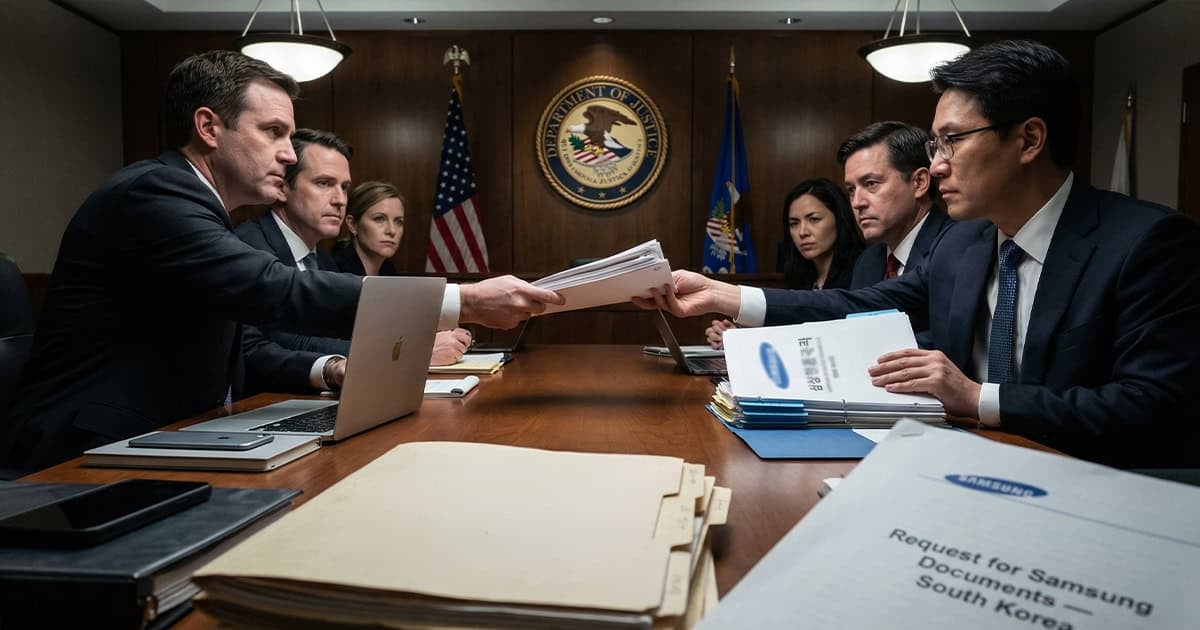
Apple is turning to international legal channels in its fight against antitrust allegations from the U.S. Department of Justice. The company has filed a request to obtain internal business documents from Samsung Electronics in South Korea, marking a significant development in the high-stakes legal battle over alleged monopolistic practices in the smartphone market.
Key Takeaways
- Apple has requested a formal letter under the Hague Evidence Convention to obtain Samsung documents from South Korea
- The company seeks internal Samsung records on smartphones, smartwatches, and the Galaxy Store to support its antitrust defense
- Samsung’s U.S. subsidiary refused to provide the documents, claiming they are held only by the Korean parent company
- The case has entered the discovery phase following Apple’s unsuccessful attempt to have the DOJ lawsuit dismissed
- South Korea previously rejected a similar document request in another Apple-related case, making the outcome uncertain
Understanding the Antitrust Case Background
In March 2024, the U.S. Department of Justice, alongside multiple states, filed a lawsuit against Apple. The complaint accuses the company of using App Store policies, developer restrictions, and tight control over critical iPhone features to stifle competition in the smartphone ecosystem and related services.
After Apple’s motion to dismiss the case was denied, the litigation moved into what lawyers call the discovery phase. This is when both parties exchange documents, gather evidence, and build their cases based on concrete data rather than legal arguments alone. It’s during this critical phase that Apple has made its move to access Samsung’s internal records.
Why Apple Wants Samsung’s Documents
Apple’s filing reveals a focused strategy. The company wants specific internal Samsung materials, including business reports, market analyses, and data about Samsung’s smartphone, smartwatch, and Galaxy Store operations. These aren’t random requests but carefully targeted information that Apple believes can help demonstrate the competitive nature of the markets it operates in.
According to Apple’s court filing, these Samsung documents could help clarify several key questions: How competitive are the smartphone and smartwatch markets really? How often do users actually switch between Apple and Samsung ecosystems? And most importantly, have Apple’s policies produced the anticompetitive effects that the DOJ alleges?
The company initially served a subpoena to Samsung Electronics America, the domestic subsidiary. However, Samsung America objected to all document requests, stating that the materials are in the possession of Samsung Electronics Co., Ltd. in South Korea, not under the control of the U.S. operation.
The Hague Convention and International Evidence Gathering
This is where international law enters the picture. Apple is relying on the Hague Convention on the Taking of Evidence Abroad in Civil or Commercial Matters, a treaty that provides a structured process for courts to obtain evidence from foreign entities in civil cases.
The mechanism works like this: Apple asks the U.S. court to issue a formal letter of request. If granted, that letter goes to South Korean authorities, who then decide whether to execute the request under Korean law. It’s not automatic, and the foreign company can still raise objections based on local legal standards.
This isn’t the first time the Hague Convention has come up in Apple-related litigation recently. Earlier this year, South Korea rejected a request from Elon Musk’s xAI for documents from Kakao, a South Korean superapp developer, in another lawsuit involving Apple. Korean authorities determined that request was too broad and sweeping.
How Apple Is Justifying Its Request
Learning from that precedent, Apple has crafted what it describes as a narrowly tailored request. The filing dedicates considerable space to explaining why the request meets the legal standards required by both U.S. and potentially Korean courts.
Apple argues four main points in its motion:
- The requested evidence is important to the litigation and directly relevant to the antitrust claims
- The letter of request is reasonably specific and tailored, not a fishing expedition
- No adequate alternative means exist to obtain this information from other sources
- Granting the request promotes U.S. legal interests and does not undermine South Korea’s interests
These justifications are not just legal boilerplate. They represent Apple’s attempt to show both the U.S. court and South Korean authorities that this is a legitimate, focused request tied to concrete legal issues, not an overly broad demand for competitor intelligence.
What This Means for the Broader Case
The Samsung document request reflects how complex antitrust litigation has become in the modern tech industry. Companies operate globally, maintain separate corporate entities in different countries, and store data across multiple jurisdictions. This creates real challenges when U.S. regulators bring cases that require evidence about global market dynamics.
For Apple, Samsung’s internal data could be valuable ammunition. If Samsung’s own records show robust competition, frequent customer switching between platforms, or thriving third-party app stores like the Galaxy Store, that could undermine the DOJ’s narrative that Apple has created an inescapable walled garden.
On the other hand, if Samsung’s documents reveal struggles to compete with Apple’s ecosystem lock-in or data showing limited platform switching, that could strengthen the government’s case.
The Uncertain Road Ahead
Whether Apple will successfully obtain these documents remains unclear. The process involves multiple decision points. First, the U.S. court must agree to issue the letter of request. Even if that happens, South Korean authorities have independent authority to decide whether to execute it. Samsung could raise objections under Korean privacy laws, trade secret protections, or other legal grounds.
The recent rejection of xAI’s request suggests South Korean authorities are willing to push back on what they view as overreaching demands. However, Apple’s more focused approach may fare better, particularly if the company can demonstrate that the specific documents relate directly to genuine competitive questions rather than proprietary business secrets.
This international evidence gathering also highlights how antitrust enforcement is increasingly bumping up against the realities of global business. Tech companies don’t operate within single borders, and neither do the competitive dynamics that regulators want to examine.
First and Geek Verdict
Apple’s move to seek Samsung documents through international legal channels shows just how serious the company is about defending itself against the DOJ’s antitrust allegations. By targeting specific Samsung records about smartphones, smartwatches, and app store operations, Apple is trying to build a factual case that these markets are genuinely competitive, not dominated by a single player.
The success of this strategy is far from guaranteed. International evidence requests face multiple hurdles, and South Korea has already shown willingness to reject broad demands for corporate data. But Apple appears to have learned from earlier missteps, crafting a more narrowly focused request that stands a better chance of approval.
For those of us watching from the sidelines, this case offers a window into how modern antitrust battles play out. They’re no longer just about legal arguments and economic theory. They’re about data, documents, and evidence that spans continents. Whether you’re rooting for Apple, concerned about monopolistic practices, or simply trying to understand how tech regulation works in practice, this Samsung document request represents an important chapter in a case that could reshape how we think about competition in the smartphone industry.