
Apple has agreed to pay a record $150,000 civil penalty to settle allegations of pricing and refund policy violations at its retail stores throughout New Jersey. The settlement marks the largest penalty ever issued under the state’s Merchandise Pricing Act and comes after the tech giant reportedly failed to comply with a previous 2017 agreement requiring clear price displays.
What Happened at Apple Stores in New Jersey
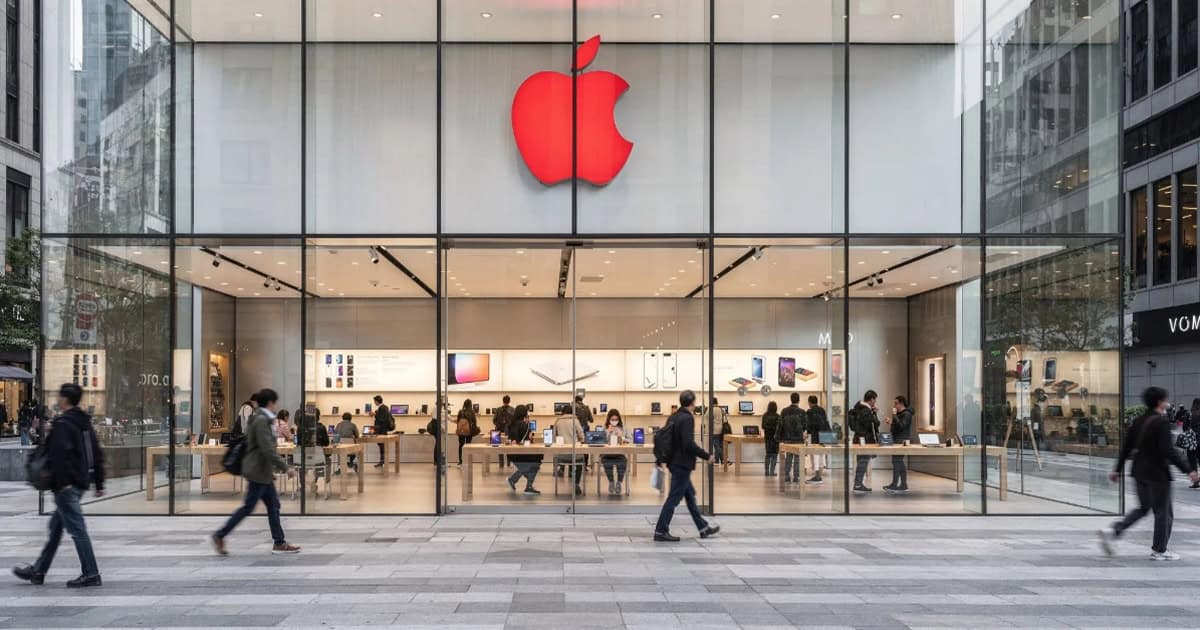
According to New Jersey Attorney General Matthew J. Platkin, state consumer protection officials conducted reinspections of 11 Apple Store locations and found widespread violations. The issues centered on missing price labels and inadequate posting of refund policies, requirements that Apple had previously agreed to address following a 2017 consent order.
The violations reportedly included missing price labels on device display tables and accessories throughout the stores. Additionally, several locations failed to properly post refund policies near cash registers and store entrances as required by state law.
The 2017 Agreement Apple Failed to Uphold
This isn’t the first time New Jersey regulators have taken issue with Apple’s retail pricing practices. Back in 2017, the state and Apple entered a consent order requiring the company to install continuously available pricing information for iPhones, iPads, MacBooks, Apple Watches, and other electronic devices displayed in its New Jersey stores.
The original dispute arose from Apple’s reliance on digital pricing systems that required customers to interact with display devices to learn prices. State officials argued this approach violated consumer protection laws designed to ensure shoppers can easily determine product costs without assistance or additional effort.
What Apple Must Do Now
As part of the settlement, Apple has agreed to change its business practices at retail locations throughout New Jersey. The requirements are specific and designed to give customers independent access to pricing information.
Under the new agreement, Apple must ensure that merchandise prices are displayed in one of three ways:
- Plainly marked by a stamp, tag, label, or sign directly on the merchandise
- Apparent on the device screen itself with minimal interaction
- Located in close proximity to the merchandise so customers can see the price without needing to speak with a salesperson
If electronic devices are used for pricing, the total selling price must be clearly and conspicuously displayed and apparent with limited interaction only.
Apple must also clearly post refund policies in at least one of these locations:
- Attached to the merchandise itself
- Affixed to each cash register or point of sale
- In a location clearly visible from the cash register
- Posted at each public store entrance
Why This Matters for Consumers
At the heart of this case is a straightforward principle: shoppers should be able to see what something costs without jumping through hoops. While Apple’s minimalist aesthetic favors clean display tables without price tags, state consumer protection laws prioritize transparency and ease of access to pricing information.
Attorney General Platkin emphasized the timing of the violations in his statement, noting that “at a time when prices are skyrocketing, consumers deserve to know what they’re paying for products on the shelves.” He went further, expressing disappointment that Apple violated the law again after being held accountable in 2017, stating there is “no excuse for Apple’s repeated misconduct.”
The settlement serves as a reminder that even the world’s most valuable tech company must comply with state consumer protection standards, regardless of design preferences or retail philosophy.
Apple’s Response
As of this writing, Apple has not publicly commented on the settlement or the underlying violations. The company’s silence is typical in legal settlements of this nature, though the agreement itself demonstrates Apple’s willingness to adjust its practices rather than contest the findings.
FAQ
Q: Does this settlement affect Apple Stores outside of New Jersey?
A: The settlement specifically addresses Apple’s retail locations in New Jersey. Other states have their own consumer protection laws, and it’s unclear whether Apple uses similar pricing practices elsewhere or if other states will take similar action.
Q: Will shoppers see changes in how Apple displays prices in stores?
A: Yes, at least in New Jersey. Apple must now ensure prices are clearly marked either on products, visible on device screens with minimal interaction, or posted nearby so customers can see them independently. Refund policies must also be more prominently displayed.
Q: What happens if Apple violates the agreement again?
A: While the settlement doesn’t specify additional penalties for future violations, repeated non-compliance would likely result in steeper fines and potentially more restrictive requirements. The Attorney General’s statement emphasized that consumers “deserve better” and promised continued enforcement.
First and Geek Verdict
This settlement highlights an ongoing tension between Apple’s design-first retail philosophy and basic consumer protection standards. While Apple’s stores are undeniably beautiful and the company has pioneered many aspects of modern retail, transparency shouldn’t be sacrificed for aesthetics. Customers deserve to know what they’re paying without having to ask or hunt for information, especially when state law explicitly requires it. The fact that this is Apple’s second violation in New Jersey raises questions about corporate compliance culture. A $150,000 fine is modest for a company of Apple’s size, but the reputational cost and operational changes required may prove more significant. For shoppers in New Jersey, this settlement should mean a clearer, more straightforward experience when browsing Apple’s retail locations.