
Apple is reportedly preparing its most significant MacBook Pro redesign in years, bringing touch functionality and the Dynamic Island feature to its flagship laptop lineup. The changes, expected to launch this fall, could fundamentally shift how we interact with macOS while addressing long-standing questions about Apple’s stance on touchscreen computers.
Dynamic Island Makes the Jump from iPhone to Mac
When Apple introduced the notch on the MacBook Pro in 2021, it felt like an aesthetic compromise without meaningful functionality. Unlike the iPhone X, which traded the notch for Face ID, the MacBook Pro’s cutout simply housed a webcam. That’s reportedly about to change with the addition of Dynamic Island, one of the iPhone’s most praised interface innovations.
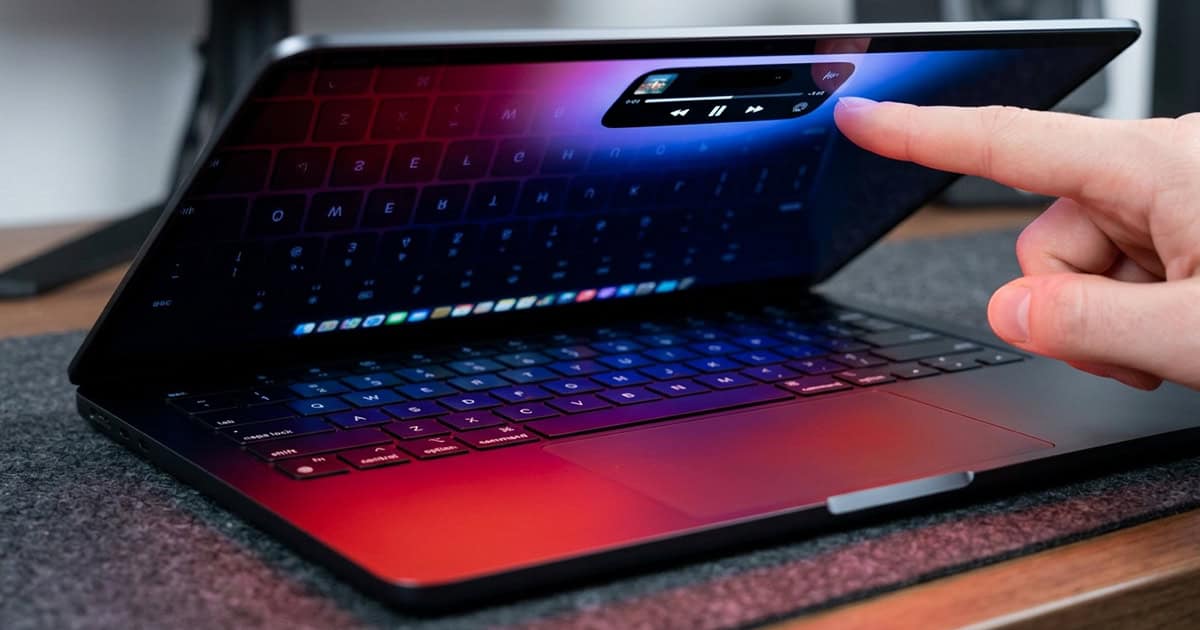
According to recent reports, the upcoming MacBook Pro will feature a Dynamic Island built around a smaller, hole-punch-sized camera cutout. This implementation is expected to be more compact than the pill-shaped cutout found on current iPhone Pro models. The feature has proven popular on iPhone for displaying real-time information like music playback, weather updates, sports scores, and ride-sharing tracking without interrupting your workflow.
For Mac users, this could mean at-a-glance access to system notifications, app activities, and background processes without switching windows or opening notification panels. It transforms what was previously wasted screen real estate into a functional interface element that feels native to the macOS experience.
Touch Interface Optimized for macOS
Apple isn’t simply adding touch capability to existing macOS interfaces. The company is reportedly developing specific touch optimizations that go beyond basic tap-and-swipe functionality. This thoughtful approach suggests Apple has spent considerable time determining how touch input should work on a traditional laptop form factor.
The touch implementation is expected to include context-aware menus that appear around your finger when you tap buttons or controls, providing relevant options optimized for touch input. The system will reportedly remember your interaction patterns and display the most appropriate controls based on previous usage. Menu bar items will automatically enlarge when touched, making them easier to select with a fingertip rather than a precise cursor.
These adaptations address a common concern about touchscreen laptops: that existing desktop interfaces aren’t designed for finger-based interaction. By creating touch-specific interface elements that appear only when needed, Apple appears to be avoiding the awkward compromise seen in some Windows convertible devices.
OLED Display Technology Finally Arrives
Beyond touch functionality, the refreshed MacBook Pro is expected to feature OLED display technology. This would mark a significant upgrade from the current mini-LED displays, offering deeper blacks, improved contrast ratios, and potentially better power efficiency. OLED has already proven successful on the iPad Pro, and bringing this technology to the MacBook Pro has been anticipated for years.
The combination of OLED and touch capability suggests Apple is positioning this MacBook Pro as a versatile creative workstation that bridges traditional laptop productivity with more intuitive, direct manipulation of on-screen content.
Remaining Questions and Concerns
While the feature set sounds promising, several practical questions remain unanswered. Adding a touchscreen typically requires design compromises that could affect the MacBook Pro’s signature characteristics:
- Will the display glass need to be thicker or heavier to accommodate touch sensors?
- How will touch functionality impact battery life, especially given the power demands of OLED displays?
- Will thermal management require design changes that affect the laptop’s profile or acoustics?
- How will Apple address the ergonomic challenge of reaching forward to touch a vertical screen repeatedly?
These aren’t trivial concerns. Apple has historically resisted touchscreen Macs partly because of ergonomic arguments, with executives previously suggesting that vertical touchscreens cause arm fatigue. The company’s solution to these challenges will be critical to the product’s success.
Release Timeline and Product Strategy
The touchscreen MacBook Pro with Dynamic Island and OLED display is reportedly planned for a fall 2026 launch. This doesn’t affect Apple’s near-term plans for the MacBook Pro lineup. The company is still expected to release updated MacBook Pro models with M5 Pro and M5 Max chips in the coming months, maintaining the current design language and display technology.
This staggered approach makes sense from a product strategy perspective. It allows Apple to serve customers who need performance upgrades now while giving the company additional time to refine the more ambitious touchscreen implementation. It also creates clear product differentiation for later in the year when the redesigned models arrive.
FAQ
Q: Will older MacBook Pro models get Dynamic Island through a software update?
A: No. The Dynamic Island requires specific hardware design changes, including a different camera cutout shape and size. Current MacBook Pro models with the traditional notch cannot be updated to support this feature through software alone.
Q: Does a touchscreen MacBook Pro mean Apple is merging iPad and Mac?
A: Not necessarily. Apple has consistently maintained that iPad and Mac serve different purposes. Adding touch to the Mac expands input options rather than eliminating the traditional keyboard and trackpad workflow. It appears to be about giving users more flexibility rather than forcing a single interaction model.
Q: Will the touchscreen work with Apple Pencil?
A: This hasn’t been confirmed. While it’s technically possible, Apple hasn’t indicated whether the touchscreen MacBook Pro will support stylus input or if that functionality will remain exclusive to iPad.
Q: How much more expensive will the touchscreen models be?
A: Pricing hasn’t been announced. However, adding touchscreen capability and OLED displays typically increases manufacturing costs. Whether Apple absorbs these costs or passes them to consumers remains to be seen, though some price increase seems likely given the significant technology upgrades.
First and Geek Verdict
Apple’s approach to bringing touch to the MacBook Pro appears thoughtful and measured, which is exactly what this transition needs. Rather than simply making the screen touch-sensitive and calling it innovative, the company seems to be rethinking how touch input should work in a laptop context. The addition of Dynamic Island addresses a previous design compromise while adding genuinely useful functionality, and OLED displays represent a meaningful upgrade over current technology.
The real test will be in the execution. Can Apple implement touch without compromising the things that make the MacBook Pro excellent, like battery life, thermal performance, and build quality? Will the touch interface feel essential or gimmicky after the novelty wears off? These questions won’t be answered until we can test the actual hardware.
What’s encouraging is that Apple appears to be taking its time with this transition, developing macOS-specific touch interactions rather than copying approaches from other platforms. If the fall timeline holds, this could be one of the most significant MacBook Pro updates in years, potentially setting a new direction for the entire Mac lineup. For users who’ve been waiting for Apple to embrace touch on Mac, this seems like it might finally be worth the wait.